“`html
The Advantages of Mirrorless Cameras
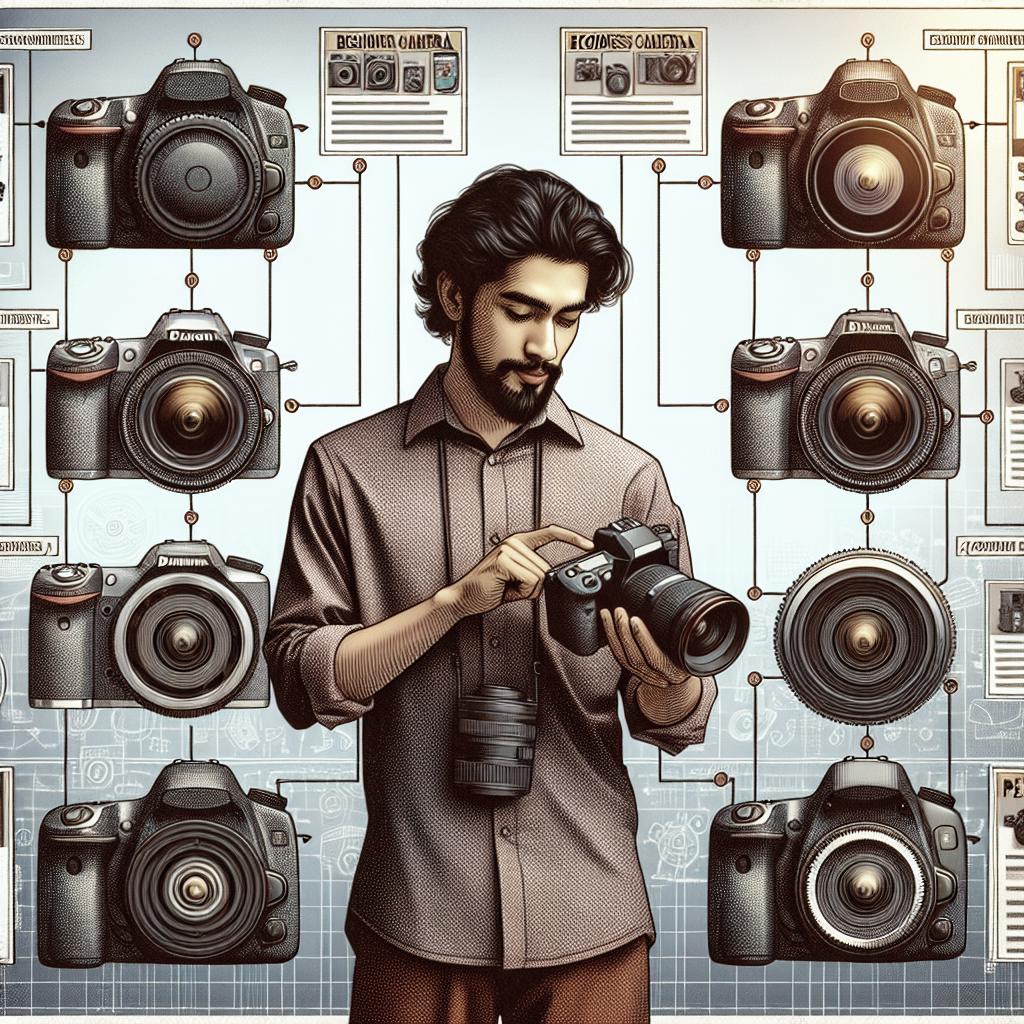
In the ever-evolving world of photography, mirrorless cameras have emerged as a formidable alternative to the traditional DSLR model. Known for their compact design and cutting-edge technology, mirrorless cameras have become increasingly popular among both amateur and professional photographers. This blog post explores the advantages of mirrorless cameras and highlights how they compare with DSLRs across various parameters such as price, size, image quality, and more. Dive in to decide which camera type suits your needs and captures your creative vision best.
Sign up now to get the best Black Friday deals!
With sales season among us, now may be the perfect time to consider investing in new photography equipment. Mirrorless cameras, in particular, often see significant discounts during Black Friday events. Be sure to sign up for alerts and newsletters from your favorite electronics retailers to make the most of these limited-time offers. Secure the best deals and enter the realm of mirrorless photography, experiencing firsthand their impressive versatility and performance.
DSLR vs. mirrorless: Price
Historically, DSLRs dominated the camera market, which meant they came with a range of pricing options to suit various budgets. However, as mirrorless technology gained popularity, manufacturers began offering competitive pricing to capture this emerging market. While entry-level mirrorless cameras can be more affordable than higher-end DSLRs, professional-grade mirrorless and DSLRs are often priced similarly, providing a wide selection at assorted price points.
It’s important to consider additional costs for lenses and accessories when comparing prices, as these can influence the overall investment. Mirrorless camera systems are continually being updated with new features and lens options, making them an increasingly valuable choice for those seeking high performance without exceeding their financial limits.
DSLR vs. mirrorless: Key differences
The primary distinction between DSLR and mirrorless cameras is the absence of a mirror mechanism in mirrorless models, which eliminates the need for an optical viewfinder. Instead, mirrorless cameras utilize electronic viewfinders or the LCD screen for image composition, offering a real-time preview of how settings modifications affect the image outcome. The removal of the mirror also results in a lighter and more compact design, a key advantage for photographers who prioritize portability.
Another significant difference is the autofocus system employed by each camera type. Mirrorless cameras often use a contrast-detection or a hybrid AF system for swift focusing, especially when shooting in live view or video modes. This technological divergence from the phase-detection autofocus found in DSLRs contributes to the unique capabilities and appeal of mirrorless models.
DSLR vs. mirrorless: Size & weight
One of the most notable benefits of mirrorless cameras over DSLRs is their size and weight. Without the internal mirror and pentaprism needed for optical viewfinders, mirrorless cameras are generally more compact and lightweight. This is particularly advantageous for travel and street photographers who prefer to carry minimal gear without sacrificing camera performance.
The reduction in size does not compromise the quality or functionality of mirrorless cameras. Many professionals have shifted to this format because it enables them to capture high-quality images without the cumbersome burden of a heavier setup. Additionally, the compact design makes mirrorless cameras less conspicuous, offering a more unobtrusive tool for candid or event photography.
DSLR vs. mirrorless: Autofocus speed
Autofocus speed and accuracy have long been realms where DSLRs held an edge, courtesy of their phase-detection AF systems. Nonetheless, mirrorless technology has evolved rapidly, with many models now incorporating hybrid autofocus systems combining contrast detection with phase detection capabilities. This innovation has narrowed the gap drastically, making mirrorless cameras efficient and sometimes superior, especially for video.
For certain tasks, such as tracking moving subjects or focusing in low-light conditions, mirrorless cameras are increasingly proving their mettle with improved AF performance. This makes them an attractive option for wildlife, sports, and action photographers seeking both speed and precision in their work.
DSLR vs. mirrorless: Previewing images
One advantage of mirrorless cameras lies in their advanced image preview capabilities. With an electronic viewfinder (EVF) or live view on the LCD, photographers can see real-time adjustments to exposure, white balance, and other settings. This real-time feedback enables better-informed decisions before taking the shot, potentially reducing post-processing time.
Conversely, DSLRs rely on optical viewfinders, which do not provide the same level of real-time feedback. While some photographers appreciate the optical viewfinder for its clarity and lack of latency, the convenience and flexibility offered by electronic systems in mirrorless cameras cannot be overstated.
DSLR vs. mirrorless: Image stabilization
Image stabilization is a crucial element for capturing sharp photographs, especially in low-light settings or when using long lenses. Many modern mirrorless cameras provide in-body image stabilization (IBIS), which supports all attached lenses by stabilizing the camera sensor to counteract any hand-held shake.
DSLRs generally offer lens-based stabilization, which is effective but lacks the universal adaptability of IBIS. As stabilized lenses can be more costly, the in-built feature in mirrorless models is an appealing alternative, enhancing the ability to capture steady shots with any lens.
DSLR vs. mirrorless: Image quality
Factors impacting image quality—such as sensor size, resolution, and dynamic range—are quite similar across both DSLRs and mirrorless cameras. Both systems are capable of producing stunning photographs suitable for any professional or personal usage. As technology advances, mirrorless cameras have seen significant improvements to match or even exceed DSLR image quality in various scenarios.
Often, mirrorless cameras leverage the lack of a mirror mechanism to further enhance image quality. With fewer moving parts, there is less risk of shutter shock, while advanced sensor technology facilitates high-quality image capture even in less-than-ideal lighting conditions.
DSLR vs. mirrorless: Video quality
As video recording has become a critical function in digital cameras, mirrorless models have consistently raised the bar with their video capabilities. The absence of a mirror mechanism enables a more efficient live view experience, allowing users to rapidly adjust settings and capture high-quality video footage with minimal disruption.
Many mirrorless cameras now offer excellent 4K video recording, with premium models providing features like in-body stabilization, dual-pixel autofocus, and more. This positions mirrorless models as highly sought-after tools for videographers and hybrid shooters seeking versatility across photo and video domains.
DSLR vs. mirrorless: Shooting speed
When it comes to continuous shooting speed, mirrorless cameras tend to have an advantage due to their lack of mechanical components found in DSLRs. This translates to faster shutter speeds and higher frame rates, allowing photographers to capture more frames in rapid succession—a critical feature for action and sports photography.
Moreover, mirrorless systems often feature silent shooting modes, which eliminate shutter noise and are beneficial in settings where noise could be a distraction or a disturbance, such as during weddings or theatrical performances.
DSLR vs. mirrorless: Battery life
One area where DSLRs typically maintain an upper hand is battery life. Due to the power needed for electronic displays and viewfinders, mirrorless cameras often consume more battery than DSLRs, which rely on optical viewfinders. This necessitates carrying extra batteries for extended shooting sessions.
Nonetheless, improvements in battery technology and energy-efficient processors in modern mirrorless models have gradually reduced this gap. With continued advancements, the gap in battery performance between the two systems is expected to further narrow.
DSLR vs. mirrorless: Lenses & accessories
The lens ecosystem has traditionally been one of the defining strengths of DSLRs, benefitting from decades of development and third-party support. However, mirrorless cameras are swiftly closing this gap as manufacturers expand their range of native lenses and adapters to accommodate legacy lenses.
This burgeoning ecosystem allows photographers to access a wider array of creative tools and accessories, thus positioning mirrorless cameras as a versatile platform capable of meeting diverse photographic needs.
DSLR vs. mirrorless: Durability
In terms of build quality and durability, DSLRs have long been regarded as robust and reliable. With more established designs and the use of weather-sealed materials, DSLRs are generally constructed to withstand demanding conditions, appealing to professionals who may face challenging environments.
Nevertheless, mirrorless cameras are not far behind. With improving technologies and enhanced weather-sealing capabilities, modern mirrorless models are becoming increasingly durable and reliable, helping rewrite the narrative on robustness in digital photography equipment.
DSLR vs. Mirrorless: Bottom Line
DSLR vs. Mirrorless: Verdict.
When deciding between a DSLR and a mirrorless camera, it’s evident that each type has its strengths and trade-offs. DSLRs are well-established and offer a robust range of lenses and long battery life. However, the modern developments in mirrorless cameras make them an attractive choice with their compact size, cutting-edge features, and excellent performance in various scenarios.
Ultimately, the decision should align with individual preferences, shooting style, and the importance of each feature to their photographic or videographic pursuits. Whether you are fascinated by the innovation of mirrorless technology or drawn to the familiarity of DSLRs, both can yield impressive results for seasoned professionals and amateurs alike.
Summary of main points
| Aspect | DSLR | Mirrorless |
|---|---|---|
| Price | Wide range with affordable and high-end models | Competitively priced with growing options |
| Key Differences | Includes optical viewfinder and mirror mechanism | Lacks mirror, uses electronic viewfinder or LCD |
| Size & Weight | Typically bulkier and heavier | More compact and lightweight |
| Autofocus Speed | Fast with phase-detection | Increasingly fast with hybrid AF |
| Previewing Images | Optical viewfinder without real-time settings view | Electronic preview with real-time feedback |
| Image Stabilization | Lens-based stabilization | Generally includes in-body stabilization |
| Image Quality | Excellent image quality | Comparable, with some exceeding DSLRs |
| Video Quality | Good, but less advanced video features | Often superior, with advanced video capabilities |
| Shooting Speed | Strong with reliable burst modes | Faster frame rates and silent shooting |
| Battery Life | Generally longer battery life | Shorter due to electronic components |
| Lenses & Accessories | Extensive ecosystem | Growing range with adapters |
| Durability | Historically more durable | Increasingly robust and weather-sealed |
“`